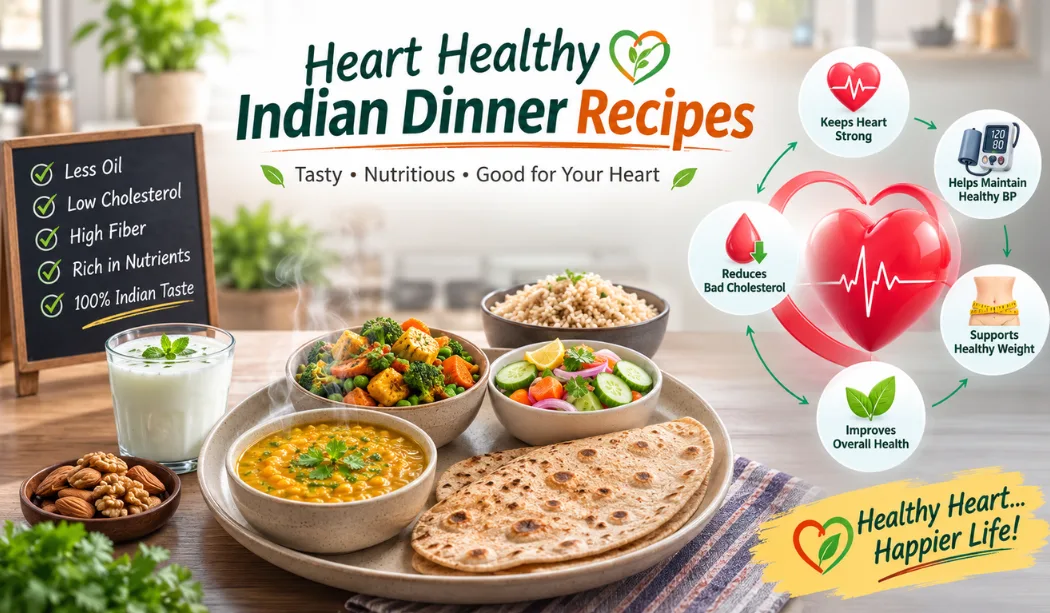
Taking care of your heart doesn't mean giving up on rich, flavorful meals. Traditional Indian cuisine is naturally packed with healing spices, high-fiber lentils, and fresh whole grains that protect your arteries and keep cholesterol in check. By making smart adjustments in cooking oil and salt, you can easily create delicious heart healthy Indian dinner recipes that nourish your body while satisfying your evening cravings.
Why are Indian dinner recipes good for heart health?
Traditional Indian food is packed with ingredients that protect your blood vessels and lower cholesterol. Spices like turmeric, cumin, garlic, and ginger contain natural anti-inflammatory compounds that keep your heart pumping strong.
Lentils, chickpeas, and fresh vegetables provide rich sources of soluble fiber. Fiber acts like a sponge in your digestive system, soaking up bad cholesterol (LDL) before it reaches your bloodstream. Using whole food ingredients helps you build heart friendly Indian vegetarian meals without sacrificing traditional flavors.
What is the best Indian dinner for heart health?
The ideal evening meal balances complex carbohydrates, lean plant protein, and healthy fats while keeping sodium levels low. A simple bowl of yellow dal made with minimal oil, served alongside cooked spinach and a small portion of whole grains, offers maximum nutritional benefits.
Focusing on heart healthy Indian dinner recipes veg options helps keep saturated fat low. Replacing refined oils with small amounts of heart-safe fats ensures your heart gets essential nutrients without extra strain.
Read Also: High Protein Indian Dinner Recipes for a Healthy Lifestyle
Top 10 Heart Healthy Indian Dinner Recipes
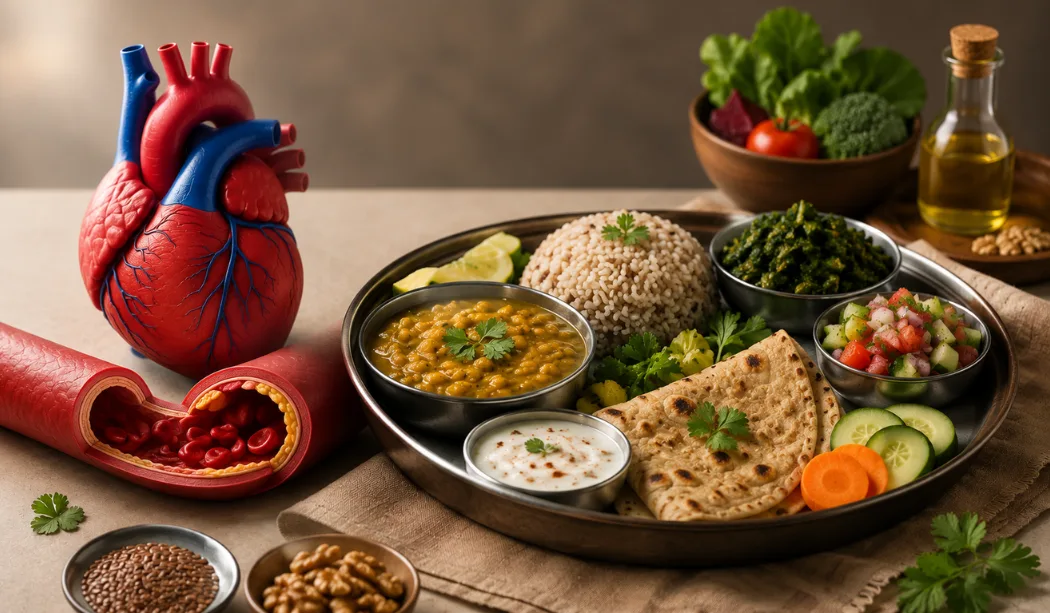
Here are ten delicious, nutrient-packed dinner ideas that protect your heart while keeping prep time simple.
1. Moong Dal Tadka with Garlic and Turmeric
Yellow moong dal is light, easy to digest, and rich in potassium. Potassium helps regulate blood pressure by balancing sodium in your body. Tempering garlic and turmeric in a tiny amount of olive oil adds flavor without unneeded fats.
2. Spinach and Cottage Cheese (Low-Fat Palak Paneer)
Spinach provides folate and nitrates, which help relax blood vessels and improve blood flow. Using low-fat paneer or fresh tofu gives you a solid protein boost while keeping saturated fat minimal.
3. Oats and Vegetable Khichdi
Replacing white rice with rolled oats increases your soluble fiber intake. Cooking oats with chopped carrots, green peas, and beans creates a hearty, low-glycemic dish perfect for dinner.
4. Vegetable Stir-Fry with Tofu and Curry Powder
Tofu is rich in soy isoflavones, which help lower bad cholesterol. Sautéing colorful bell peppers, broccoli, and tofu with Indian spices gives you a crisp, vitamin-rich meal.
5. Masoor Dal (Red Lentil Soup)
Red lentils cook quickly and are loaded with dietary fiber and magnesium. Magnesium keeps your heart rhythm steady and relaxes blood vessel walls.
6. Steamed Vegetable Idli with Tomato Chutney
Steaming eliminates the need for oil entirely. Idlis made from fermented lentils and brown rice batter are gentle on digestion and full of gut-healthy nutrients.
7. Methi (Fenugreek) and Whole Wheat Rotis
Fenugreek leaves contain compounds that help lower blood sugar and cholesterol levels. Mixing fresh fenugreek into whole-wheat dough creates a fiber-rich flatbread.
8. Lauki (Bottle Gourd) Curry
Bottle gourd is over 90% water and very low in calories. It provides a light, soothing dinner option that supports overall heart function and hydration.
9. Baingan Bharta (Roasted Eggplant)
Eggplants contain antioxidants called anthocyanins, which protect heart cells from oxidative stress. Roasting the eggplant creates a smoky flavor without heavy creams or butter.
10. Chickpea and Tomato Curry (Chole)
Chickpeas provide steady energy, plant protein, and soluble fiber. Cooking them in a fresh tomato, ginger, and onion gravy keeps the meal filling and heart-safe.
Read Also: 10 Best Indian Dinner Recipes for Family Healthy
How to make heart healthy Indian dinner recipes?
Cooking for heart health comes down to cooking techniques and smart ingredient swaps. You do not need to rewrite every recipe; simple changes in your kitchen routine make a massive impact over time.
- Ditch deep frying: Choose roasting, steaming, pressure cooking, or air frying instead.
- Control your oil: Use a spray bottle or measure oil with a teaspoon rather than pouring directly from the bottle.
- Spice up for flavor: Use lemon juice, raw garlic, ginger, and dry-roasted spices to boost flavor so you can cut back on salt.
- Load up on greens: Fill half your plate with non-starchy vegetables at every meal.
Smart Ingredient Choices for Cardiovascular Wellness
Understanding ingredient swaps helps you adapt any recipe for better health benefits.
Brown Rice vs White Rice for Heart Health
White rice has its outer bran layer removed, stripping away fiber and key nutrients. Brown rice vs white rice for heart health is a simple choice: brown rice contains whole grain fiber that prevents blood sugar spikes and keeps you full longer.
Homemade vs Restaurant Indian Dinner
Restaurant dishes often rely on heavy cream, butter (makhani), and extra salt to enhance flavor. Choosing a homemade vs restaurant Indian dinner gives you complete control over your sodium, oil, and portion sizes.
Managing Specific Health Conditions with Indian Meals
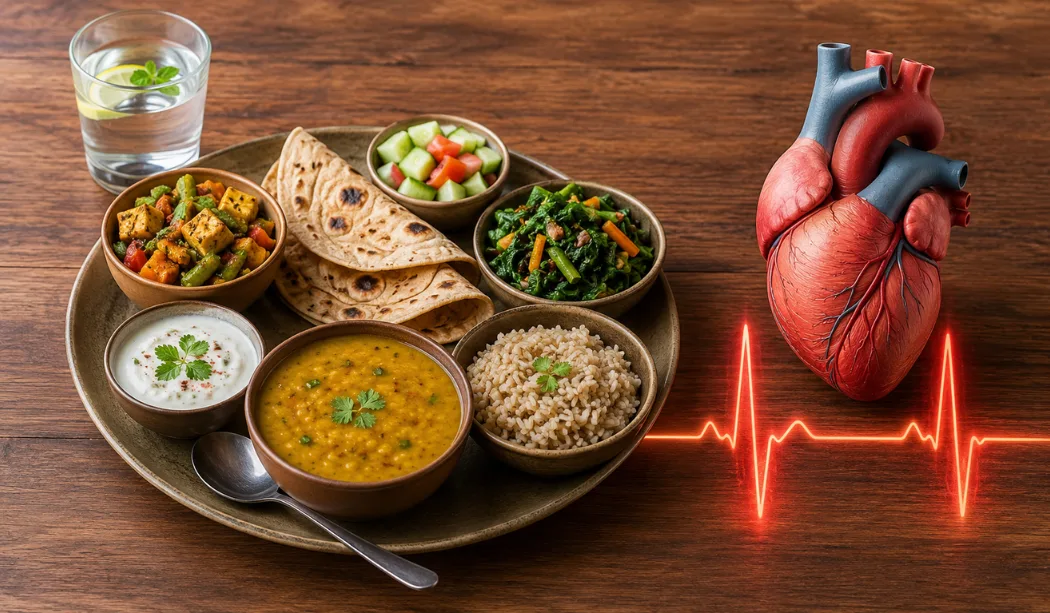
Different heart conditions require tailored dietary tweaks. Here is how to adjust your meals based on specific needs.
Dinner Recipes for High Blood Pressure
To manage hypertension, focus on high-potassium, low-sodium ingredients. Potassium helps your body flush out excess sodium.
- Use spices like cumin, coriander, and amchur (dry mango powder) to replace extra salt.
- Include potassium-rich foods like spinach, tomatoes, and bottle gourd.
- Avoid papads, pickles, and packaged spice mixes high in sodium.
Diabetic Friendly Indian Dinner Recipes
Controlling blood sugar is essential for protecting your arteries. High blood sugar can damage blood vessels over time.
- Pair complex carbs like quinoa or millet with plenty of protein and fiber.
- Use bitter gourd (karela), fenugreek, and cinnamon to support healthy insulin sensitivity.
- Keep meal portions consistent every evening.
Heart Stent Diet Menu Vegetarian
Recovering from a procedure requires easy-to-digest, low-fat meals that minimize cardiovascular stress.
- Stick to boiled or steamed dishes like vegetable daliya (broken wheat) or moong dal khichdi.
- Keep oil use under 1–2 teaspoons per day across all meals.
- Focus on antioxidant-rich vegetables like beets and leafy greens.
Read Also: 10 Easy Indian Dinner Recipes With Vegetables for Fast Weeknight
7-Day Diet Plan for Heart Patients Indian
Planning your meals ahead stops you from ordering takeout when you are tired. Here is a simple week-long guide featuring healthy Indian meal prep dinner ideas.
| Day | Dinner Plan | Heart Benefit |
|---|---|---|
| Monday | Oats Khichdi with a side of steamed spinach | Rich in beta-glucan fiber to lower cholesterol |
| Tuesday | Low-fat Palak Paneer with 1 Whole Wheat Roti | High in nitrates and protein for blood vessel health |
| Wednesday | Moong Dal Tadka with Brown Rice & Cucumber Salad | Potassium-packed and easy to digest |
| Thursday | Tofu & Mixed Vegetable Curry with Bajra Roti | Plant protein with zero cholesterol |
| Friday | Masoor Dal with Roasted Eggplant (Baingan Bharta) | Loaded with fiber and antioxidant protection |
| Saturday | Steamed Vegetable Idli with Fresh Tomato Chutney | Low-fat, oil-free, fermented for gut health |
| Sunday | Lauki Curry with Quinoa & Tossed Green Salad | Light, hydrating, and low in calories |
Expert Opinion
"In clinical practice, switching from refined oils and heavy sodium to whole lentils, spices, and steamed vegetables produces measurable improvements in blood pressure and lipid profiles within weeks." — Dr. K. R. Sharma, Senior Preventive Cardiologist
Frequently Asked Questions
What is the best oil to use for heart healthy cooking?
Use oils high in unsaturated fats in very small amounts. Cold-pressed mustard oil, olive oil, and sesame oil are good choices when used in moderation (1-2 teaspoons per meal).
Can heart patients eat spices like chili and pepper?
Yes! Spices like black pepper, turmeric, and modest amounts of red chili are rich in antioxidants. Capsaicin in chilies can even support healthy circulation, provided it does not cause acid reflux.
How much salt should be used in a heart-safe dinner?
Keep total daily salt intake under 5 grams (about 1 teaspoon) for the entire day. Use herbs, lemon juice, and roasted spices to enhance meal flavors instead of relying on the salt shaker.