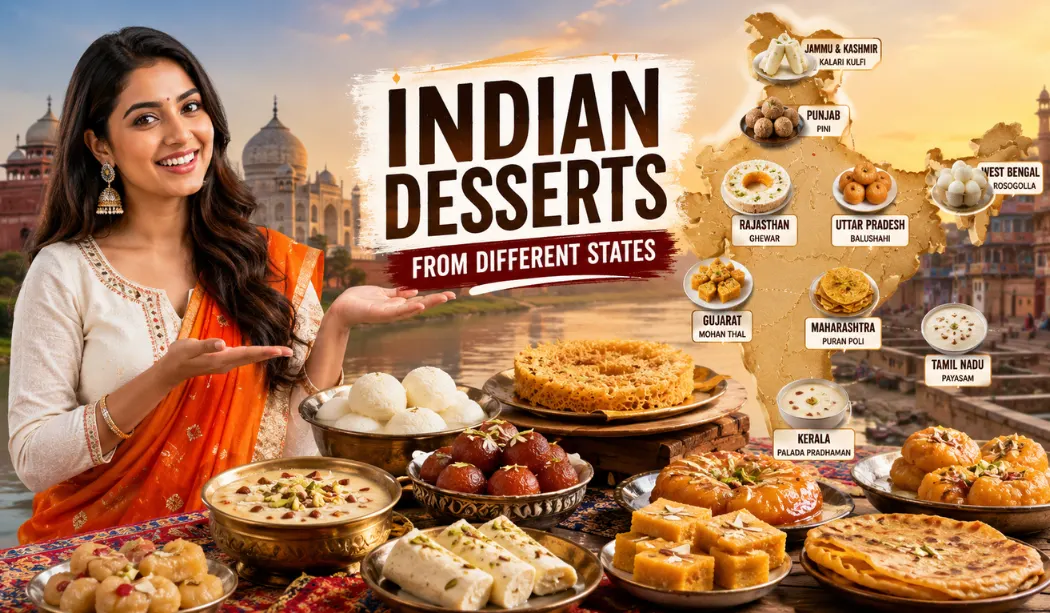
India is a place filled with gorgeous colors, beautiful delicious food and amazing languages. If you've got an appetite for sweets, India feels like a huge playing field. Each region of the country is a treat waiting for you. From rich milk puddings to sweet, golden syrup-dripping desserts The sheer range of choices is awe-inspiring. A journey through Indian Desserts From Different States is like having the time to learn about history in a delightful way. Each sweet is an intriguing story of the region, its food items, and the ancient customs of their home. We'll take an exciting sugary trip across India and discover these legendary food masterpieces.
Why Do Indian States Have Different Desserts?
Are you curious about why the sweetness of your sweets is so different after crossing an official border of India? The reason is in the nature and past (Fuller 2005). India is home to a variety of soil, weather and trees (Fuller 2005). Due to this, various elements thrive best in various locations (Fuller 2005).
As an example, north India is characterized by cold winters as well as vast plains of green. The climate is ideal for cattle farms and fields. This is why the northern states are known to create delicious, traditional milk based sweets from India made with fresh dairy products, heavy cream as well as clear butter (ghee) (Salis and others. 2021).
However, the coastal states of southern America are brimming with palms that dance as well as hot sun. They utilize local coconut rice flour, rice flour, as well as dark jaggery in the creation of the local dishes (Ahuja 2013,). Trade routes from the past and royal kingdoms also brought distinctive spices, nuts as well as cooking methods to diverse areas (Srinivas (2011)).
What Is the Oldest Traditional Dessert in India?
To discover the king of all Indian sweets, we need to go back to more than 4000 years. Archaeologists searching for ancient archaeological locations dating back to earlier in Indus Valley Civilization found an amazing discovery. They discovered handmade, round sweets balls that were made of wheat, barley and chickpeas (Salis and co. 2021). These delicious treats from the past are predecessors of today's Ladoo!
In the past, Ayurvedic writings from a few thousand years ago also refer to Apupa. A sweet flatcake made from rice flour, cooked in ghee pure and coated with honey sweet. In the course of time, apupa evolved to the malpua. Malpua can be described as an extremely soft and deep-fried, fluffy cake that has been soaked in cardamom-scented syrup. The rich culinary tradition creates malpua the most ancient and popular sweet from each Indian states portfolio.
Read also: Famous Milk Based Indian Desserts: 10 Best Creamy Sweets
The Magnificent Top 10 Indian Desserts From Different States
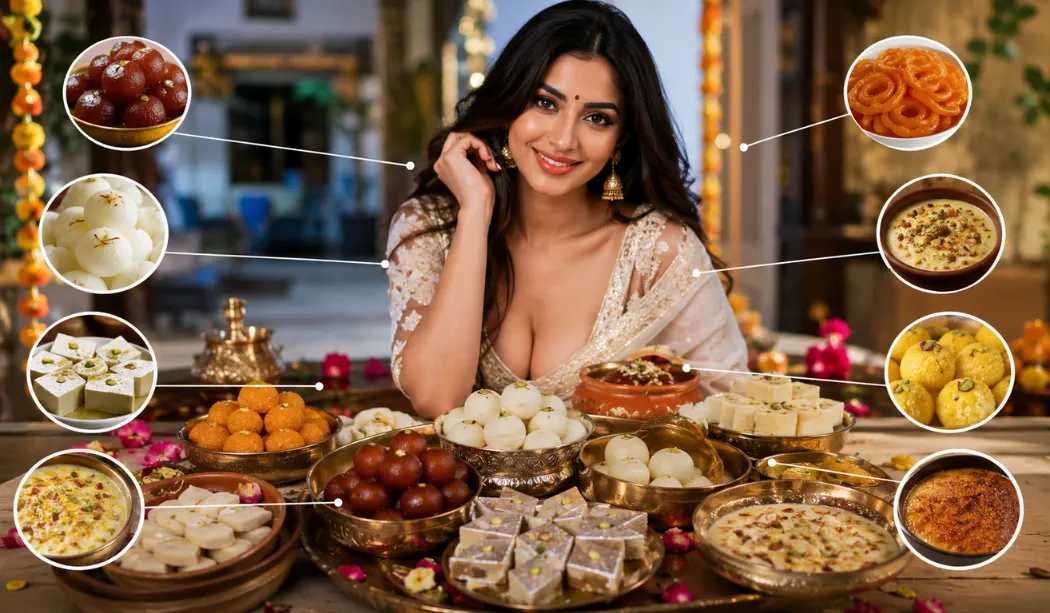
Let's dive into the definitive list of the most delicious traditional Indian desserts you can test during your next culinary journey. The ten options listed here are the top of regional pastry craftsmanship.
1. West Bengal: Rosogolla
There is no discussion of famous sweets from any Indian state without including West Bengal's proud. Rosogolla is a sweet that's unique to West Bengal. Rosogolla can be described as soft, spongy balls composed of cottage cheese ( chhena). Master halwais work the cheese until it is smooth. Roll it into smooth rounds and then cook it in a the clear sugar syrup. As you eat an genuine Bengali Rosogolla and taste it, syrup's sweet flavor explodes into your mouth in the form of a sweet cloud.
2. Rajasthan: Ghewar
Ghewar Ghewar is an exquisite, disc-shaped sweet that resembles the delicate honeycomb. Chefs prepare a light mixture of flour and ghee before dropping it into hot, steaming oil. The hot oil forms the most beautiful webbed design. After it is cooled, the disc is covered in sugar syrup before being decorated with delicious Rabri (condensed milk) as well as crunch almonds. It's one of many visually distinct desserts that comes from Indian States.
3. Maharashtra: Puran Poli
It is a warm, golden flatbread, which families make in affection. The filling, known as puran is prepared by cooking sweet chana daal using dark jaggery, cardamom as well as Nutmeg. Chefs put the sweet mix into a dough made of wheat and then roll it out thin. Then they roast it on hot griddles with little heaps of ghee until the dough becomes fragrant and specked.
4. Uttar Pradesh: Petha
The city of origin is the historical town located in Agra, Petha is a transparent, sweet-like sweet. It's made from the ash gourd that is often referred to as winter Melon. The crafters peel off the gourd and cut it into neat rectangular pieces and then dip it into sugar syrup that is boiling. This produces a crisp and crisp candy that can be flavored with rosewater or delicate saffron.
5. Gujarat: Shrikhand
Shrikhand Shrikhand is the smooth and creamy sweet that is made of hung curd. Bakers put thick yogurt into an muslin cloth, and then allow all the liquid to go away over night. The spongy yogurt is then whipped up vigorously using powdered sugar, saffron's scent as well as a hint of powdered green cardamom. The yogurt is served chilled and is a deliciously luxurious taste.
6. Punjab: Gajar Ka Halwa
As winter approaches to North India, red carrots are abundant in the markets. Punjabi kitchens turn these delicious veggies to gajar ka halwa. Cooks cut the carrots into pieces and cook them gently in milk with full fat for a long time. Add sugar, ghee and roasted khoya for the most intense, reddish-orange flavor that warms your body by the inside.
7. Tamil Nadu: Mysore Pak
The sweet legend was created by the royal kitchens at The Mysore Palace. It is a nimble and precise recipe in order to create. Cooks continuously stir chickpeas (besan) into a bubbling sugar syrup, while melting hot grated ghee over it. After cooling and sets, it forms an elongated, pliable block, which smells strongly of toasty dairy.
8. Kerala: Ada Pradhaman
Ada Pradhaman is widely regarded as the queen of the traditional sweets ( payasam) in South India. It is a flat and steamed rice flakes, also known as the ada. Rice flakes slow cooked in a rich, creamy coconut milk as well as sweet syrup of jaggery. This dish is garnished with cashews and fine pieces of coconut that are fried in Ghee.
9. Goa: Bebinca
Bebinca Bebinca is an amazing, multi-layered cake that demonstrates the Goa's Portuguese influence. It takes a lot of patience to bake. The batter is made up of the rich eggs, coconut milk sugar as well as flour. Bakers pour the batter in a thin layer into a baking pan, bakes it and adds ghee to the top before pouring the next layer. Bebinca is a traditional Bebinca includes between seven and sixteen distinct delightful layers.
10. Bihar: Khaja
Khaja can be described as an amazing, crisp sweet, made up of layers of layers made of fine flour. Chefs roll thin layers of dough, place each one with fat between and then chop them into smaller rectangular shapes. Once deep-fried, the pastry sheets puff up wonderfully. Crispy pastry can be coated briefly in warm sugar syrup to keep the pastry layers wonderfully crunchy.
Exploring South Indian Desserts From Different States
If we take a closer look at South Indian desserts from diverse states there is an incredible use of indigenous ingredients. Southern kitchens do not rely heavily on solid milk like the khoya. Instead, they revel in the sweetness that comes from cereal grains and trees from the area.
- Andhra Pradesh: It is known as the home of Pootharekulu meaning "paper sweets." Bakers produce thin, paper-like sheets using the rice batter in hot clay. The sheets are then layered using ghee, sugar powdered and dried fruit.
- Karnataka: Known for Dharwad Peda which is a distinctive dark brown fudge that is made of continuous roasting of milk solids and sugar. The fudge is then rolled with tiny sugar crystals.
- Tamil Nadu: The state of Tamil Nadu celebrates Paal Payasam, the simple, but deeply comforting milk pudding made of broken rice that is slowly cooked in sweetened milk until it is reduced and changes to a light pink.
Traditional Indian Sweets for Festivals and Cultural Celebrations
In India sweets aren't simply food, but they also have an important religious significance. A holy ceremony or celebration of family isn't complete without a sweet treat for gods (Gulati and Misra, 2014). Serving desserts as a gift is an amazing means to bring joy and honor guests.
When it comes to Ganesh Chaturthi, families make Modak which is an exquisite steamed dumpling that is that is filled with sweet coconut. The god of food, Lord Ganesha is believed to be a lover of the sweets, and they symbolize sweetness and wisdom. When it comes to Diwali the golden boxes of Kaju Katli as well as Motichoor Laloo can be exchanged among neighbors in celebration of the triumph of the light against darkness. They are the best instances of Indian desserts that have historical significance.
Read also: Indian Desserts With Condensed Milk: Top 10 Instant Sweets
How Are Traditional Indian Sweets Preserved Today?
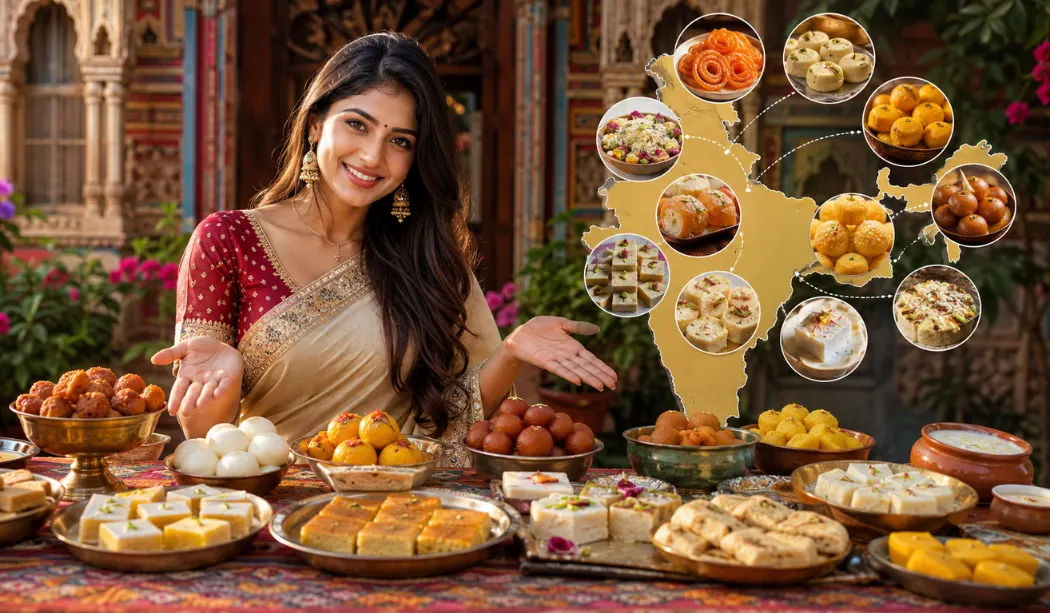
Back in the past, mothers made fresh desserts each day because dairy products spoil rapidly. Modern technology can help us to preserve these amazing customs without altering the original flavor. Halwais has now embraced clean stainless-steel equipment to keep a strict hygienic. Innovative packaging helps protect delicate flavors such as Ghewar and Khaja and allows NRI families either in Europe, the USA and Europe to have a delicious flavour of the home they call.
FAQs
Which sweet is known as the national sweet of India?
Although India has no official sweet that is a national treat as defined by laws, Jaliebi is very popular across nearly all states. Crispy, bright orange concentric rings stuffed with warm syrup of sugar are consumed across the nation as breakfast and after dinner snack (Jain 2020).
What makes milk sweets from West Bengal unique?
Bengali sweets are made with Chhena as the main ingredient, which is milk cheese that has been curdled and fresh. It is not like the khoya (evaporated solids from milk that are utilized for the production of sweets in North India), Chhena is lightweight, moist and also high in moisture. This is what gives Bengali sweets such as Sondesh as well as Rasmalai its renowned gentle, soft taste.
Are there any healthy traditional Indian sweets?
Yes! There are many regional winter desserts composed of highly nutritious components like sesame seeds and jaggery, ragi and gum that is edible ( gond) (Jain 2020). Sweets such as the Til Ladoo as well as Pinni offer long-lasting warmth and energy throughout the cold winter months, and do not rely on refined sugars like white.