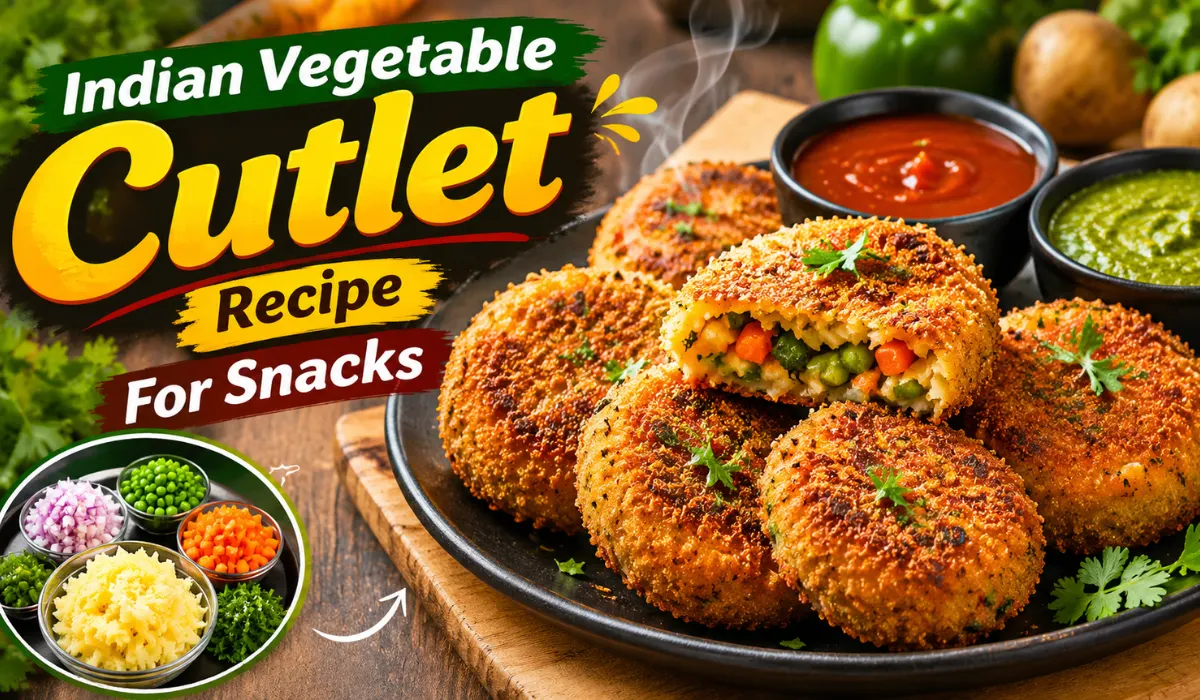
There are few sncky delights like a crispy brown vegetable cutlet served hot with a spicy green mint-coriander chutney and tangy tamarind sauce to accompany, more evocative of an indian afternoon. Vegetable cutlets fill the gap between comfort food and celebratory finger food, whether strewn with commuters on the busy railway platforms, in florid street stakes or in bustling neighborhood bakeries and family kitchens. Their great effects come from using a satisfying textural contrast: a crunchy well-seasoned breadcrumb crust with soft mashed potatoes in its filling and sweet carrots, earthy green peas, nutty roasted peanuts or cashews.
Cutlets differ from their heavy pastry counterparts, which require hours of fermentation or delicate rolling, and are excellent for straightforward home preparation. Crumple up the mixture, chop, grate, boil, and assemble patties in advance and just before the guests that pan-fry, shallow-fry, or air-fry the patties or when the monsoon rains come our way outside. A well-prepared batch will provide the coveted feast of happiness to the post-school munchies, will seamlessly complement masala chai enjoyed with your sundowner set of post busy evening fellowship, and will also easily blend into the new find of vegetables in your crisper drawer.
Culinary Roots and Regional Variations Across India
The term cutlet has its origins in the culinary exchanges of the colonies, but it has become so completely Indianized that it is now part of the Indian everyday culinary culture. In contrast to Western-cutlets that usually focus on a single chunk of meat or fish with egg and crumbs, Indian vegetarian tasting parties feature various cuts of vegetables, freshly cooked spices, vegetables and whole spices, and savvy binders of plant protein.
Cooks in different regions make regional adjustments in starch, vegetable and aromatic proportions. Cutlets from eastern India and from Bengal are typically stuffed with finely grated beetroot, potatoes, roasted cumin and crushed peanuts which gives them a deep crimson hue and a sweet-savory flavour. In western and northern kitchens, grated carrots, French beans and green peas are the major ingredients and a roundout of bright and interesting spices brings the dish's punch – ginger, green chilies, chaat masala and fresh cilantro. Some cook at home use the unripe flesh of banana or sweet potato to provide a different texture to their dishes, and in festive dishes they sometimes find it useful to stuff a sprinkle of golden raisin and chopped cashew into the middle for a sweet-salty surprise!
Read Also: Spicy Indian Snacks For Evening Cravings: 10 Quick And Tasty
Essential Ingredients and Smart Substitutions
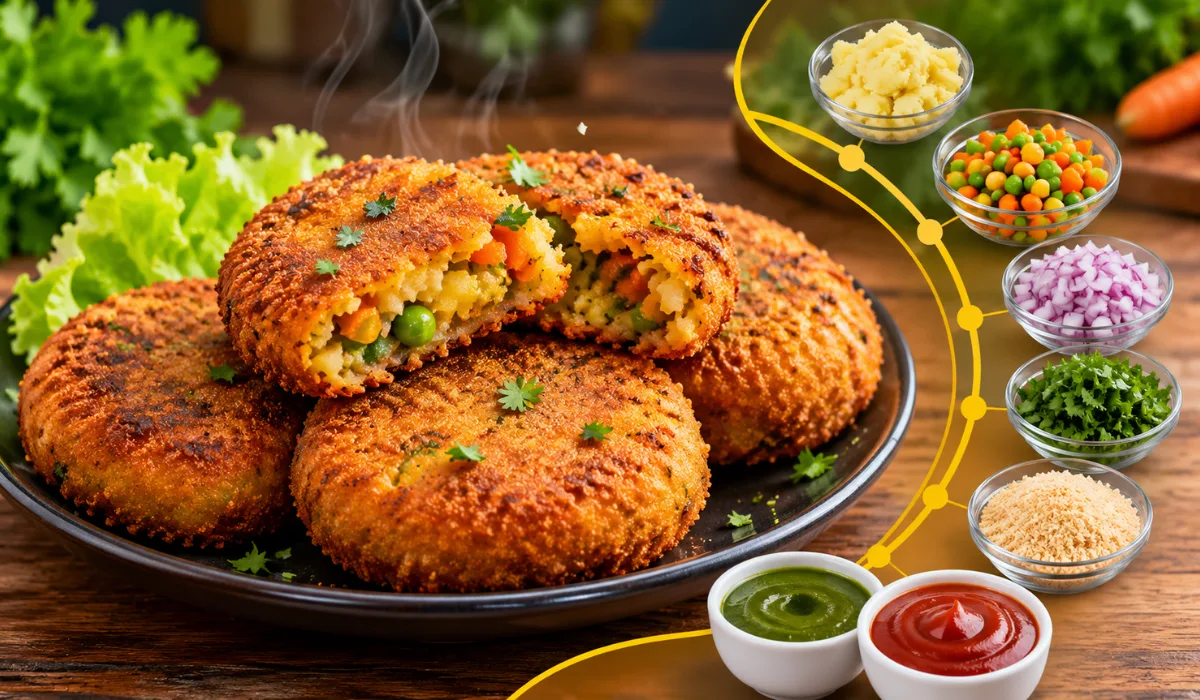
The first step in creating a solid veggie cutlet is to get the moisture-starch-flavor balance right. When the amount of water is too much from grated vegetables, the patties become soggy and break apart in the pan; however, if the amount of water is too little, the patty mixture will be dry and crumbly. When mashed well, firm, starchy potatoes make a good source of cohesion but are not unpleasant to eat when mashed.
Finely grated carrots, finely chopped French beans and sweet green peas adds colour and mild sweetness and bite to the dish. Hard vegetables can be grated on the small holes offered by a box grater, which is ideal for infusing the mixture with flavor without breaking up the vegetables. Freshly grated ginger adds fragrance, chopped fresh coriander leaves add fragrance, finely minced green chillies add warmth and fresh, ground cumin, coriander powder, turmeric, garam masala, and amchur/chaat masala add warmth and tang.
Roasted poha (flattened rice), roasted gramflour (besan) or regular bread crumbs can be used inside the dough for binding and crispness; and coarse bread crumbs or panko can be used on the outside for the crispness. Don't use anything containing onions or garlic because of religious or dietary beliefs—traditional vegetable cutlets are awesome just on ginger, green chili, cumin and coriander! When any one of the vegetables is in short supply replace with finely shredded cabbage, grated beetroot or sliced sweet corn and the volume of vegetables will be adjusted, but the rate of moisture will remain the same.
Preparing the Vegetables and Spices
Thoroughly preparing patties ahead of time helps avoid watery patties and uneven cooking. Wash and peel potatoes and then boil or steam them until fork-tender, but not falling apart. It is best to leave skins on and steam or boil whole potatoes so that excess water does not get into the starch before peeling.
In a large wok or a skillet, heat up 1 tablespoon of oil in a still medium heat. Mix cumin seeds in it and crack gently for a couple of seconds, add grated ginger and minced in green chillies and mix for a few seconds till it gives off a nice aroma. Include finely grated carrots, finely chopped French beans and green peas and a little salt. Cook quickly for 4-5 minutes or until the vegetables become soft and all the juices that the brisk cooks have released have dried up.
Add ground coriander, a pinch of turmeric to add a warm color and garam masala to add some flavor; taste and cook for half a minute until aromatic. Move the vegetables from the cooking pot into a large mixing bowl to allow steam to vacate it quickly. Cool mixture before mixing with mashed potatoes; hot vegetables bind to potatoes if mixed with them at the same time.
Mixing, Shaping, and Coating Cutlets
When cool, mash boiled potatoes into warm or room temp but not too big of chunks and fold with spiced vegetables. Add a few finely chopped cilantro leaves, a little bit of lemon juice or a pinch of amchur/powdered roasted poha for brightness and a couple tablespoons of bread crumbs if the mixture seems a bit soft. Sample a speck and make tweaks of taste, chilli or tang before shaping.
Give your hands a little oil or water so the mixture won't stick, then split into even portions about the size of a golf ball and make them larger, then plum-sized, based on thickness of cutlets desired. Smoothly roll each piece between your palms and gently spread it into a disk ½ to 3/4" thick. Round discs, croquettes (oval works well too, but adhere to the same rule as round) and classic heart shapes work well, provided the thickness is even so there is no danger that the inside cooks before the outside becomes brown.
To prepare the coating, put two small bowls out: one a thin slurry that is 2 or 3 tablespoons of all-purpose flour/little water/countless a pinch of salt and a second bowl of breadcrumbs. Dip each patty in the slurry, just enough so that crumbs do not come off, press gently into the crumbs on both sides. The chilling of the coated cutlets for 15 to 20 minutes, on a tray, allows the crust to set and prevent patties from falling apart in cooking.
Cooking Methods: Pan-Frying, Shallow-Frying, and Air-Frying
The potatoes and mixed vegetables are already cooked and thus the main focus of cooking cutlets is crisping with an even heating from the inside and sealing from the outside without getting them in oil and juices. A well-chosen heavy skillet or tawa works well for shallow frying, and the dish will be golden brown with crisp edges, due to the ideal amount of quality medium-hot oil used. Add cutlets gently, without crowding in pan, to avoid the oil becoming hotter. Wait 2-3 minutes and carefully, using a flat spatula, turn over to brown the bottom, then turn over again and cook the other side until crisp and dark golden. Allow it to drain on a wire rack for a short period and not on paper towels where steam is trapped in the lowest layer.
To successfully prepare lighter patty snacks during the day, try to use a flat tawa, and refrain from using more than two to three teaspoons of oil and press the patty gently, ensuring that it is evenly coloured throughout. Brush or daub both sides of the breaded cutlets just lightly with some oil and cook in your heated air fryer until these are crisp and gold – about 10-12 minutes, flipping halfway through the dry time.
Read Also: Best Protein Rich Vegetarian Indian Snacks: 10 Healthy Recipes
Serving Pairings and Chutney Ideas
Hot vegetable cutlets are best served juicy from the pan and with a condiment to cut through the richness of potato and fried crust. Fresh green mint chutney and cilantro chutney pairs with green chilli, ginger, lemon juice, roasted cumin and a pinch of salt or black salt brings a herbally cooling breeze. Contrasted with this is sweet-and-tangy tamarind-date chutney, and ketchup is a favorite for children every year.
Eat poppers with sliced onions, lemon wedges and hot spiced tea or filter coffee to make a sturdier platter or light meal. Alternatively, place a crisp cutlet inside a toasted burger bun or pav with some green chutney, shredded lettuce and sliced tomatoes for a quick to-go burger sandwich.
Meal Prep, Storage, and Reheating Tips
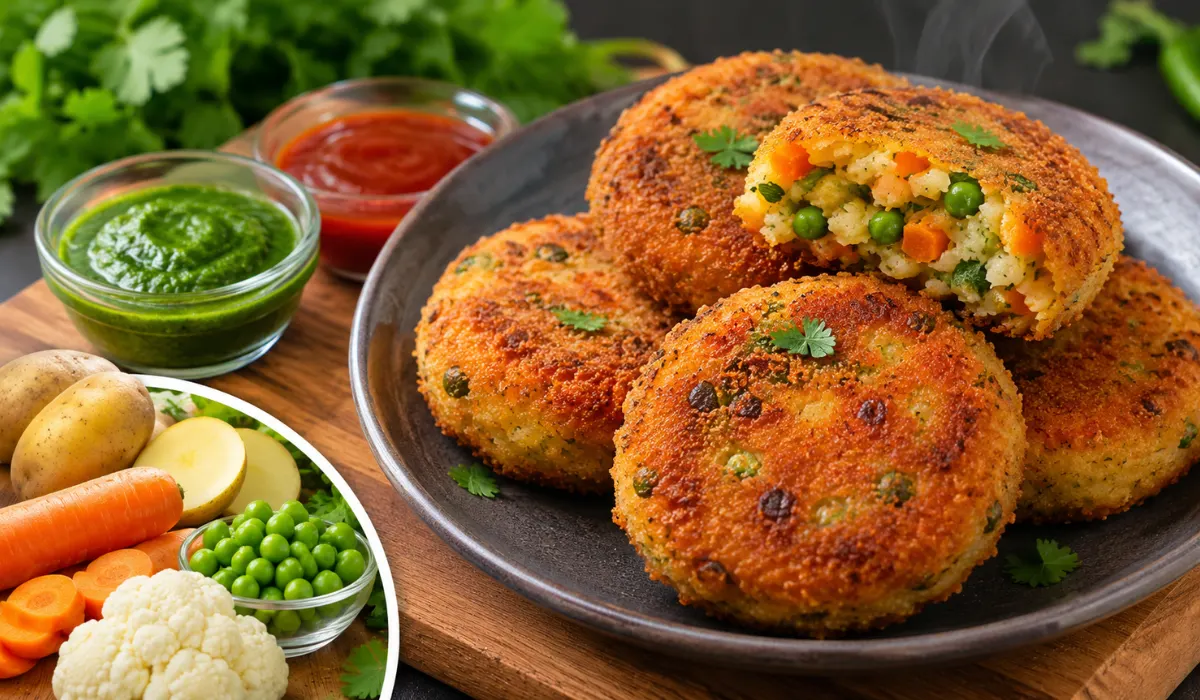
When you divide up into cutlets, vegetable doing makes a good companion for a hectic job. Potatoes, vegetable mix can be boiled, chopped, sauteed and then refrigerated in an airtight container for up to 2 days. Prepare cutlets, shape and breadcrumbs a few hours before serving and allow to chill prior to serving.
Cooked cutlets can be stored in a covered container in the refrigerator for up to 2-3 days. Reheat crispness—not soft leftovers—in an air fryer or an oven at approximately 180–190°C for 5–8 minutes or in a lightly greased skillet at a medium-low flame. If you do wish to make your cutlets crispy, don't microwave the breadcrumbs as they become soft in no time.
Troubleshooting Common Cutlet Mistakes
Even very skilled cooks occasionally end up with grease and/or crumbled cutlets. The majority of problems revolve around moisture, heat and handling. If cutlets crack or crumble during frying, it means the filling material has too many liquid contents from too many wet, fresh vegetables or too large a mass from vegetables that are not mashed enough or it is made with to little binder. This is usually simply solved by adding in 1 or 2 spoonfuls of breadcrumbs or roasted besan/grated poha and letting the shaped patties cool off prior to sauté. If flames go out rapidly but the middle remains lukewarm, reduce the flame a little to allow steady heat to reach the middle without burning the crumbs. If cutlets are heavy or oily, make sure your oil is hot enough before you add them to it and don't flip them over too many times until the crust has set up.
Frequently Asked Questions
1. Can I make Indian vegetable cutlets without breadcrumbs?
Try to make crisp-cutlets but without the usual breadcrumbs! Poha (flattened rice), gram flour (besan), crushed cornflakes or semolina (rava) is suitable both for holding the mixture together and as a coating.
2. Why do my vegetable cutlets fall apart when I flip them?
Usually, cutlets are not as sound as they can be when the vegetable mix is too wet, oriented too loosely, or turned up too soon, before a light crust is formed on the bottom of the cutlets. The vegetables are quickly sautéed, cooled, formed into patties, briefly refrigerated and carefully turned over when the bottom of the patty is golden.
3. Are vegetable cutlets better deep-fried, shallow-fried, or air-fried?
For everyday snacks, shallow-frying and air-frying can be used that way as it does not require much oil, even with precooked filling, since the filling is already cooked within the shell. Crutches are an easy, useful method for draining patties from the deep fryer into a uniform crunch, which occurs when the heat of the oil is maintained and the patties are kept on a wire rack when frying.
4. Which vegetables work best for classic vegetable cutlets?
Potatoes add structure and creaminess, carrots and green peas and French beans add colour, sweetness and light bite. Cabbage, corn, beetroot or sweet potato can also be introduced as long as any excess moisture is removed before cooking.
5. Can I make the cutlet mixture a day ahead?
Yes, the vegetable and potato mixture can be prepared the day in advance and refrigerated, tightly covered. Form and cache cutlets up to the last minute before you eat them so they will have a crisp exterior.